Description
About This Course
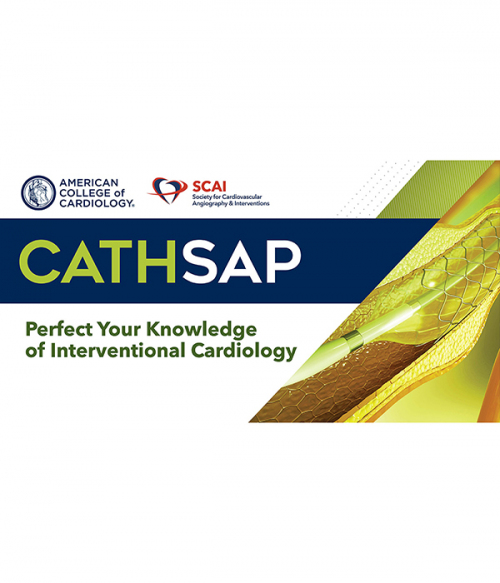
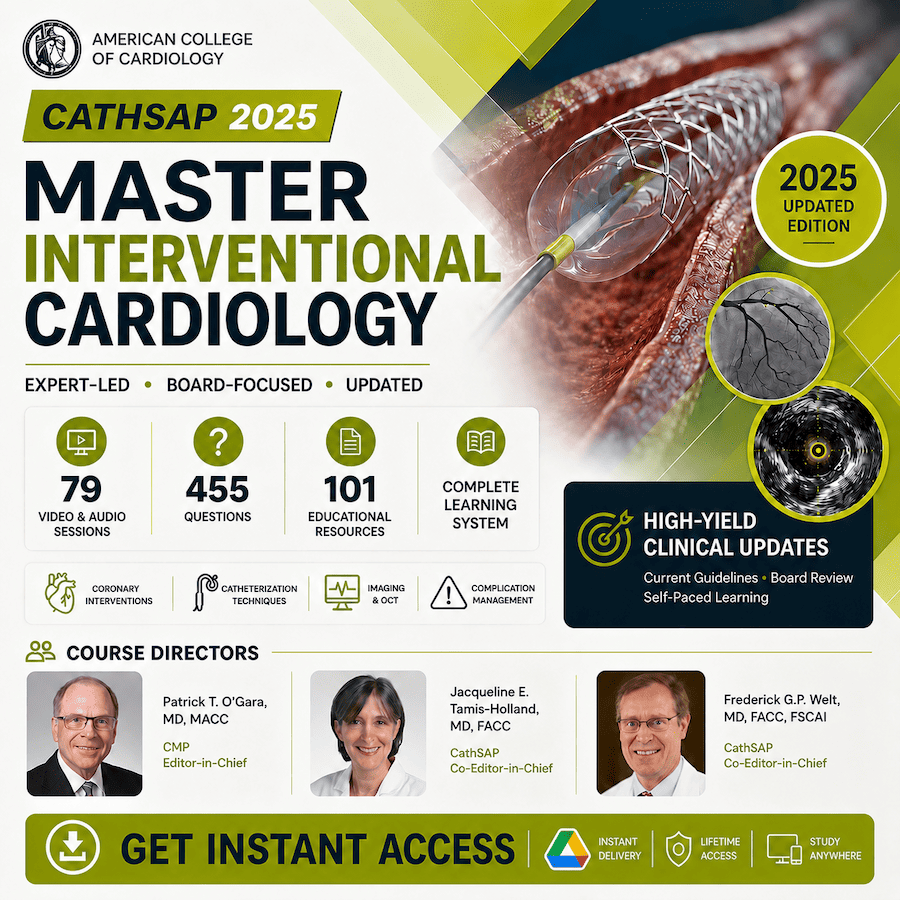
CathSAP 2025 — Interventional Cardiology is a comprehensive self-assessment and learning program developed by the American College of Cardiology for physicians who want to strengthen their knowledge across the full spectrum of interventional cardiology.
This program is designed to support board preparation, knowledge reinforcement, clinical decision-making, and ongoing professional development through structured learning modules, video/audio presentations, case-based questions, and practical study tools.
The course covers major areas of interventional cardiology, including case selection, cardiac catheterization, coronary intervention techniques, complications, pharmacology, imaging, vascular biology, and catheter-based management of noncoronary disease.
Why Choose This Course
- Developed by leading cardiovascular experts through the American College of Cardiology.
- Covers the full interventional cardiology curriculum in a structured, self-paced format.
- Includes board-style case-based questions with detailed explanations and references.
- Supports targeted study by helping identify strengths, weaknesses, and knowledge gaps.
- Includes flexible video/audio learning for review on desktop, tablet, or mobile devices.
- Focused on real-world clinical decision-making, procedural strategy, and patient safety.
- Updated with current science, guidelines, device innovations, and interventional practice trends.
Faculty
- Patrick T. O'Gara, MD, MACC
Editor-in-Chief
ACC Editorial Leadership - Sunil V. Rao, MD, FACC, FSCAI
CathSAP Co-Editor-in-Chief
Interventional Cardiology Leadership - Frederick G.P. Welt, MD, FACC, FSCAI
CathSAP Co-Editor-in-Chief
Mayo Clinic Arizona - Julia H. Indik, MD, PhD, FACC
Performance Question Editor-in-Chief
ACC Editorial Leadership - Donna M. Polk, MD, MPH, FACC
Practice Question Editor-in-Chief
ACC Editorial Leadership - Contributors include interventional cardiology experts from leading cardiovascular centers including Mayo Clinic, Stanford University, Johns Hopkins, Vanderbilt University Medical Center, Baylor University, and Emory University.
Learning Objectives
Identify Knowledge Gaps
Use structured self-assessment to recognize areas that need targeted review for board preparation and clinical practice.
Apply Case Selection Principles
Evaluate appropriate patient selection for diagnostic catheterization, PCI, peripheral, and structural interventions.
Interpret Angiography & Hemodynamics
Strengthen interpretation of coronary anatomy, lesion severity, ventricular function, and intracardiac pressure data.
Optimize PCI Strategy
Apply evidence-based revascularization strategies using lesion complexity, patient factors, and Heart Team considerations.
Use IVUS, OCT, FFR & iFR
Integrate intravascular imaging and physiologic assessment tools to guide lesion evaluation and procedural planning.
Manage Procedural Complications
Recognize, prevent, and manage complications including vascular injury, no-reflow, perforation, and acute vessel closure.
Apply Pharmacology in the Cath Lab
Review antiplatelet, anticoagulant, thrombolytic, antiarrhythmic, and vasoactive therapies used in interventional cardiology.
Improve Cath Lab Safety
Incorporate quality, safety, radiation-reduction, and systems-based practice principles into daily interventional care.
Course Curriculum & Learning Modules
01. Case Selection & Management
- Patient selection for diagnostic cardiac catheterization
- Patient selection for percutaneous coronary intervention
- Clinical presentation, noninvasive testing, and guideline-directed indications
- Heart Team decision-making and patient-centered interventional planning
02. Procedural Techniques I: Fundamentals of Cardiac Catheterization
- Fundamentals of cardiac catheterization
- Radial and femoral access strategies
- Hemodynamic assessment and coronary angiography interpretation
- Radiation safety and access-site complication reduction
03. Procedural Techniques II: Coronary Interventional Equipment & Techniques
- Coronary interventional equipment and techniques
- PCI strategy and procedural planning
- Complex lesion assessment and intervention
- High-risk PCI, left main disease, bifurcation lesions, and CTO considerations
04. Post-Procedural Care
- Post-PCI management and patient monitoring
- Antiplatelet and anticoagulant therapy after catheter-based procedures
- Quality, safety, and outcomes after intervention
- Follow-up care and secondary prevention strategies
05. Complications of Coronary Intervention
- Vascular injury and access-site complications
- Contrast-associated kidney injury
- No-reflow, coronary perforation, and acute vessel closure
- Recognition, prevention, and management of procedural complications
06. Catheter-Based Management of Noncoronary Disease
- Peripheral intervention principles
- Structural heart intervention concepts
- Catheter-based cardiovascular care beyond coronary disease
- Appropriate utilization of peripheral and structural interventions
07. Basic Science
- Vascular biology foundations
- Plaque formation, vascular injury, and restenosis
- Pathophysiology relevant to catheter-based intervention
- Scientific principles supporting modern interventional practice
08. Anatomy, Anatomic Variants & Anatomic Pathology
- Coronary anatomy and anatomic variants
- Anatomic pathology relevant to intervention
- Lesion assessment and procedural implications
- Anatomy-driven decision-making in the catheterization laboratory
09. Pharmacology
- Antiplatelet therapy in interventional cardiology
- Anticoagulants, thrombolytics, antiarrhythmics, and vasoactive drugs
- Guideline-directed medical therapy before, during, and after procedures
- Pharmacologic decision-making in complex interventional scenarios
10. Cardiac Imaging, Assessment & Miscellaneous Topics
- Intravascular ultrasound and optical coherence tomography
- FFR, iFR, and physiologic lesion assessment
- Imaging, radiation risks, and procedural safety
- Systems-based practice, quality improvement, patient safety, and multidisciplinary care
Who Should Take This Course
This course is designed for interventional cardiologists, cardiology fellows, board examination candidates, practicing cardiologists, cath lab physicians, cardiovascular specialists, and healthcare professionals seeking to deepen their expertise in interventional cardiology.
Delivery & Access
Course Materials
Includes 101 learning modules, 79 video/audio presentations, and 455 case-based questions with structured study resources.
Instant Access
Access is provided after purchase so you can begin reviewing the course materials without delay.
Lifetime Access
One-time purchase with ongoing access to your digital learning materials for flexible long-term review.
All Devices
Study on phone, tablet, laptop, or desktop with a flexible format built for busy cardiology professionals.
Reviews
“Very well organized for interventional cardiology review. The case-based questions helped me identify weak areas quickly.”
Interventional Cardiology Fellow“The combination of modules, video/audio learning, and clinical questions makes it practical for both board preparation and day-to-day review.”
Practicing Cardiologist“Excellent resource for reviewing PCI, imaging, pharmacology, and cath lab complications in a focused format.”
Cath Lab PhysicianFAQ
Is this course recorded?
Yes. The course includes recorded video/audio presentations and digital learning materials for self-paced study.
What materials are included?
The package includes 101 learning modules, 79 video/audio presentations, 455 case-based questions, and structured study resources.
When will I get access?
Access is provided after purchase so you can begin reviewing the materials as soon as your order is completed.
Can I watch on any device?
Yes. The course can be accessed on compatible phones, tablets, laptops, and desktop computers.
Who can I contact for help?
You can contact support if you need help with access, course materials, or download instructions.


6 reviews for CathSAP 2025 – Updated February 2025 (Videos + Audios + Slides + Quiz)