

Description
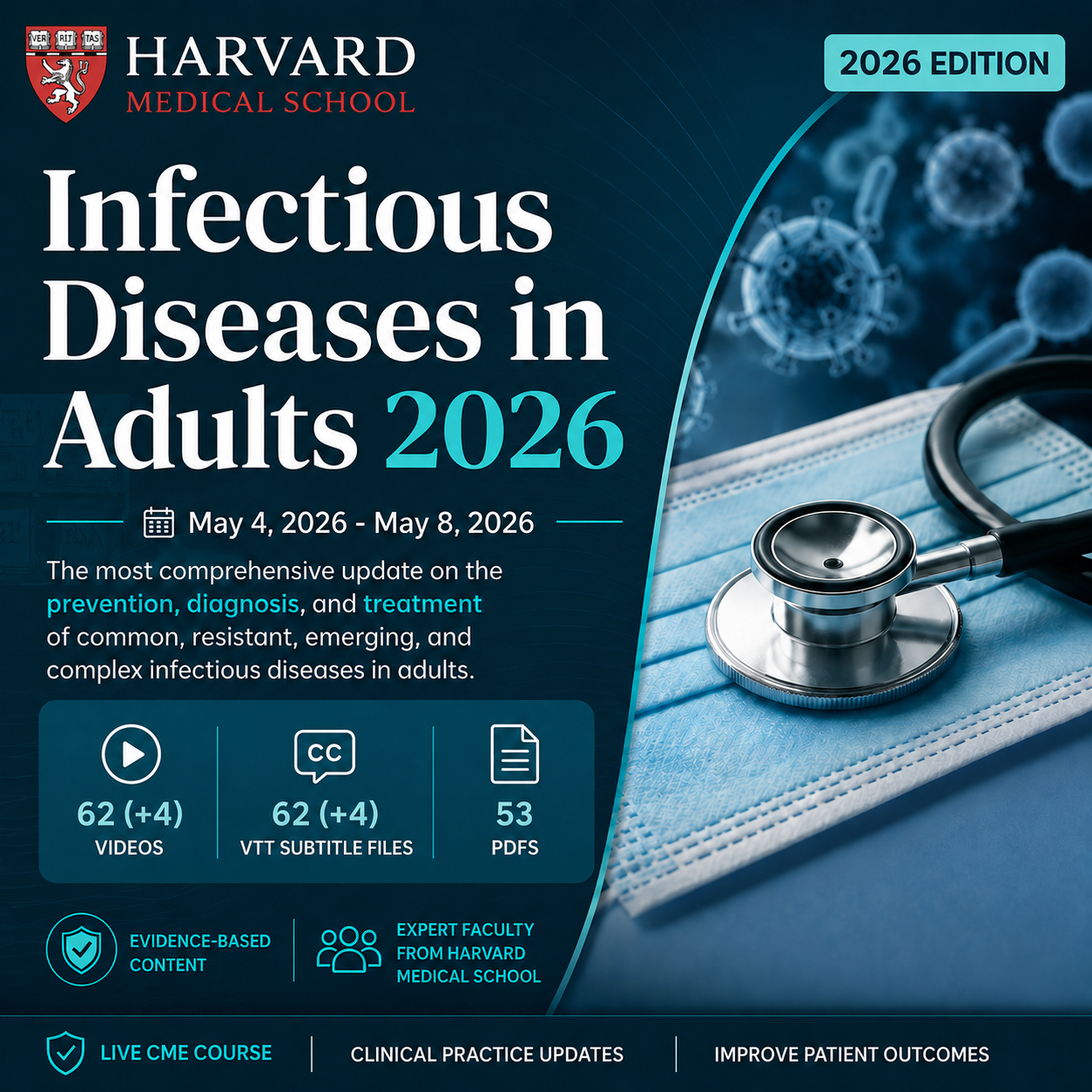
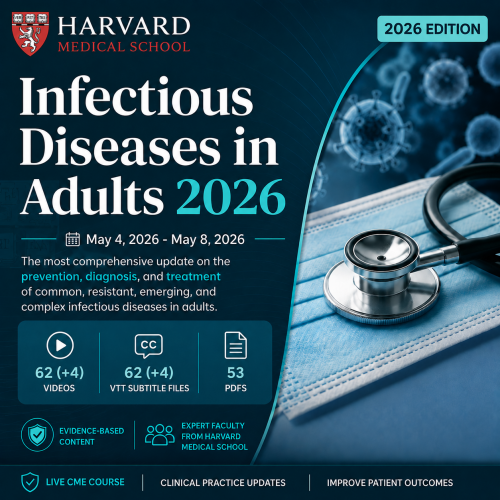
Harvard Infectious Diseases in Adults 2026
Harvard Infectious Diseases in Adults 2026 is a comprehensive, evidence-based clinical update covering antimicrobial stewardship, HIV medicine, resistant organisms, fungal and viral infections, transplant-related infections, sepsis, and complex multidisciplinary care.
About Harvard Infectious Diseases in Adults 2026
This intensive program reviews state-of-the-art strategies for preventing, diagnosing, and treating infectious diseases in immunocompetent and immunocompromised adults. Leading faculty provide practical guidance across inpatient, outpatient, and critical care settings.
The curriculum combines expert lectures, multidisciplinary workshops, case-based learning, and interactive discussions. It integrates current guidelines, evolving therapies, rapid diagnostics, and modern approaches to resistant and difficult-to-manage infections.
Key Learning Objectives
Core Clinical Areas
✓ HIV prevention, treatment, opportunistic infections, PrEP and PEP
✓ COVID-19, respiratory viruses, hepatitis, vaccines and emerging infections
✓ Antifungal diagnostics and systemic fungal infections
✓ Tuberculosis, drug-resistant TB and nontuberculous mycobacteria
✓ Tropical, tick-borne and mosquito-borne diseases
✓ Sepsis, CNS, orthopedic, urinary tract and intra-abdominal infections
✓ Transplant, hematologic malignancy, endocarditis and device-related infections
Complete Course Topics
Who Should Take This Course?
Delivery & Access
📥 Complete Digital Package
62 main videos + 4 bonus videos, matching VTT subtitle files, and 53 PDF resources.
💾 Course Size
18.58 GB main course plus 66.94 GB of bonus content.
📱 Flexible Learning
Study on compatible phones, tablets, laptops, and desktop computers.
🎓 Professional Education
Designed for healthcare professionals seeking advanced infectious diseases education.
Frequently Asked Questions
Is this course suitable for infectious diseases board preparation?
Yes. Its comprehensive updates are highly relevant to board preparation and current clinical practice.
Does it cover resistant infections and antimicrobial stewardship?
Yes. It includes resistant Gram-positive and Gram-negative organisms, stewardship, and evidence-based antimicrobial management.
Are HIV and COVID-19 updates included?
Yes. Dedicated sessions address HIV prevention and treatment, opportunistic infections, long COVID, respiratory viruses, and vaccines.
Does it include multidisciplinary case discussions?
Yes. Workshops and case-based sessions bring together specialists in infectious diseases, surgery, pharmacy, radiology, cardiology, pulmonology, and other fields.
Medical Education Disclaimer: This educational material is intended for healthcare professionals and clinical practitioners seeking advanced infectious diseases education and evidence-based clinical updates.

3 reviews for Harvard Infectious Diseases In Adults 2026 (Videos + PDFs)